
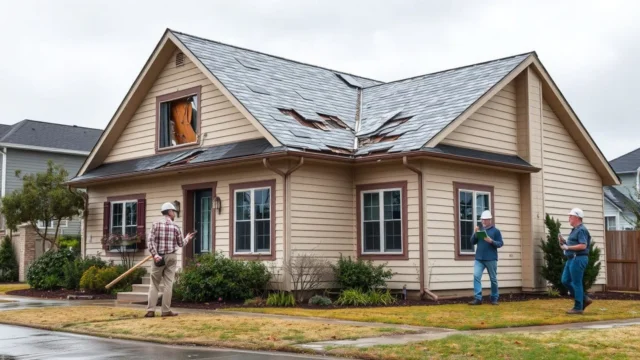
Storm season can leave behind more than visible debris. Some of the most serious problems show up in a building’s structure, where wind, rain, hail, and falling limbs can weaken key components without obvious warning signs.
Knowing the most common structural repairs after storm season helps property owners spot issues early and understand what contractors actually do to make a home or commercial building safe again. While every project is different, repair work usually follows a clear process: inspect the damage, stabilize the structure, replace compromised materials, and confirm the building can handle future weather events.
Roof framing often takes the first hit
Roof damage is one of the first things contractors check after a major storm. High winds can lift roofing materials, but the bigger concern is what happens underneath when roof decking, rafters, or trusses are stressed or exposed to water.
How hidden roof structure damage shows up
Sagging rooflines, soft spots in the attic, new ceiling cracks, and doors that suddenly stick can point to roof framing problems. Water intrusion can also weaken plywood decking and cause fasteners to loosen over time.
How contractors repair roof framing
Contractors begin by removing damaged roofing materials so they can inspect the deck and framing members. If the damage is limited, they may sister new lumber to existing rafters or replace sections of decking.
When trusses are split, warped, or displaced, repairs become more technical. In those cases, contractors often work from an engineer’s plan to brace, reinforce, or replace the damaged components while keeping the roof stable throughout the process.
Water intrusion often leads to wall and ceiling damage
Storm-driven rain can enter through damaged roofs, siding, flashing, and windows. Once moisture gets inside, it can affect wall framing, insulation, drywall, and ceiling assemblies long after the storm has passed.
Why wet walls can become structural issues
Not every leak becomes a structural problem, but prolonged saturation can rot wood studs, rust metal connectors, and weaken sheathing. In multi-story buildings, water can also travel downward and spread damage well beyond the original entry point.
How contractors address storm-related moisture damage
Repair usually starts with moisture mapping and demolition of soaked finish materials. Contractors remove wet drywall and insulation, dry the framing with air movers and dehumidifiers, and then evaluate whether studs, plates, or sheathing need replacement.
If mold begins to develop, remediation may happen before rebuilding starts. This step matters because structural repairs are only effective if the underlying moisture problem has been fully resolved.
Foundation movement can appear after heavy rain
Extended rainfall changes soil conditions around a building. Saturated soil can expand, shift, or wash away, putting new pressure on foundations, footings, and slab edges.
Signs the foundation may have shifted
Diagonal cracks above doors and windows, uneven floors, gaps at trim, and sticking windows are common warning signs. In crawl spaces and basements, contractors may also find new cracking, water seepage, or displaced support piers.
How contractors stabilize a storm-affected foundation
The fix depends on what caused the movement. Contractors may improve drainage first by redirecting downspouts, grading the soil, or installing drains to reduce hydrostatic pressure.
If settlement or washout has already affected structural support, foundation specialists may use piers, underpinning systems, or slab stabilization methods. Once movement is controlled, cracks can be repaired and affected framing above the foundation can be realigned if needed.
Damaged siding and sheathing can weaken exterior walls
Wind and hail do not just affect the surface of a building. When siding is broken or torn away, the sheathing and weather barrier underneath may be exposed to repeated moisture and impact.
Why exterior wall assemblies matter structurally
Wall sheathing helps resist lateral movement from wind loads. If it becomes soft, delaminated, or detached, the wall may lose part of its ability to stay rigid under stress.
How contractors rebuild compromised wall sections
Contractors remove the damaged siding and inspect the layers beneath it. Rotted sheathing is cut out and replaced, damaged framing is reinforced or swapped out, and a new moisture barrier is installed before the finish siding goes back on.
This is also the stage where flashing details around windows, doors, and corners get corrected. Good repairs do more than patch visible damage; they restore the wall’s ability to shed water and resist future wind pressure.
Decks, porches, and attached structures are easy to overlook
After a storm, people tend to focus on the main building, but attached structures often suffer their own structural damage. Decks, covered porches, and carports can loosen at their connection points or shift if supporting posts are undermined by saturated ground.
Common trouble spots on attached structures
Contractors often find split posts, corroded connectors, loose ledger boards, and uplift damage where wind has stressed roofed porch framing. These issues may not seem severe at first glance, but they can create serious safety risks if left unaddressed.
How repairs are made safely
Temporary shoring may be installed before any damaged member is removed. Contractors then replace weakened posts, upgrade hardware, reinforce connections to the main structure, and make sure footings still provide adequate support.
Structural repairs usually start with stabilization and documentation
One thing that surprises many property owners is how methodical the repair process is. Before major reconstruction starts, contractors document the damage, check for immediate hazards, and stabilize compromised areas to prevent further movement.
What homeowners and property managers can expect
Photos, measurements, moisture readings, and notes about material condition are often gathered during the inspection. In more complex cases, contractors may coordinate with structural engineers, roof consultants, or foundation specialists before recommending a final scope of work.
Why proper sequencing matters
The most effective repairs happen in the right order. Drying, bracing, structural replacement, and weatherproofing all need to be timed correctly so one fix does not interfere with another.
That is especially important when damage affects several systems at once, such as a roof leak that also impacts wall framing and interior ceilings. A rushed cosmetic patch can hide deeper issues, while a well-sequenced repair restores both safety and long-term performance.
Conclusion
The most common structural repairs after storm season involve roof framing, water-damaged walls and ceilings, shifting foundations, compromised exterior walls, and weakened attached structures. Each issue may start with weather exposure, but lasting repairs depend on careful inspection and a clear plan for restoring structural strength.
For property owners, the key takeaway is simple: visible storm damage is not always the full story. When contractors address hidden structural problems early, buildings are safer, repairs are more effective, and the next round of severe weather is less likely to cause the same level of harm.